


SC Property Tax Reassessments and Appeals
One of the biggest concerns homeowners have is receiving a notice that their property's value has increased.
Fortunately, South Carolina has laws in place that help protect many homeowners from dramatic increases in taxable value between countywide reassessments. Whether you own a home in Beaufort County or Jasper County, here's what you need to know.
Property Reassessments Happen Every Five Years
South Carolina law requires every county to conduct a countywide property reassessment every five years. During a reassessment, the County Assessor reviews market conditions and estimates the current fair market value of every property.
Although both Beaufort and Jasper Counties follow the same five-year cycle required by state law, they are not on the same schedule.
Beaufort County
- Last countywide reassessment: 2023
- Next scheduled reassessment: 2028
Jasper County
- Last countywide reassessment: 2025
- Next scheduled reassessment: 2030
- The county continues on its own five-year reassessment cycle, separate from Beaufort County.
Your Home Value May Increase More Than Your Taxable Value
This is one of the most misunderstood parts of South Carolina property taxes.
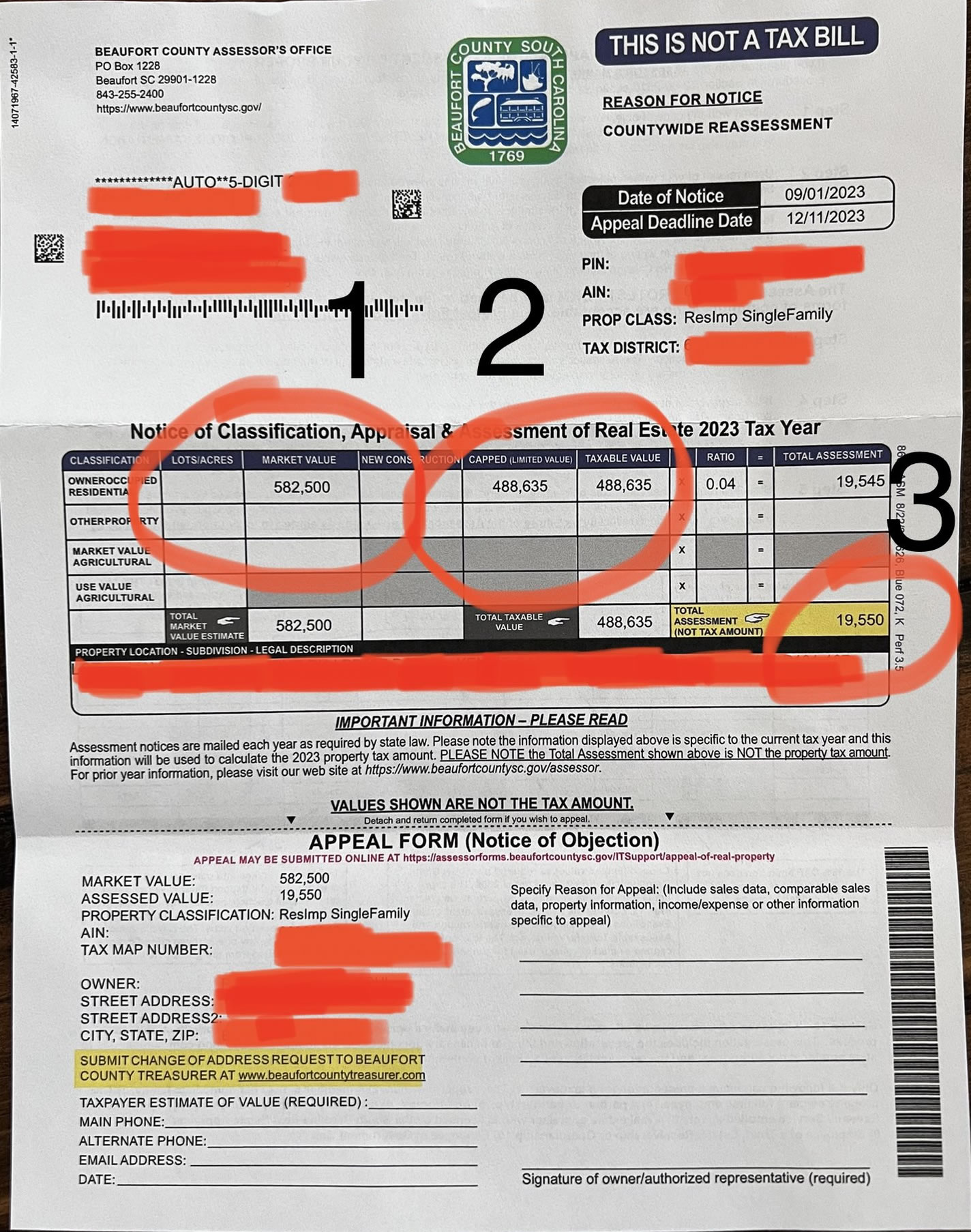
During a countywide reassessment, the Assessor determines your home's current fair market value. However, that does not necessarily become the value you're taxed on.
For many properties, South Carolina limits the increase in taxable value to 15% over a five-year reassessment cycle. This is commonly referred to as the 15% cap.
Example
Suppose your home had a taxable value of $400,000.
Five years later, the market value has increased to $550,000.
Even though the home's market value increased by 37.5%, the taxable value may be limited by the 15% cap (assuming no exceptions apply).
That means your property taxes may be based on approximately $460,000 instead of the full market value.
This cap helps cushion homeowners from rapidly rising property values.
When Does the 15% Cap NOT Apply?
There are several situations where the limitation may no longer apply.
These include:
- Purchasing a home
- Most transfers of ownership (called an Assessable Transfer of Interest, or ATI)
- New construction
- Major additions or improvements that increase the property's value
When one of these events occurs, the property may be appraised at its current market value rather than the previously capped value.
Can I Appeal My Property Assessment?
Yes.
If you believe your property has been overvalued, both Beaufort and Jasper Counties provide a formal appeal process.
Common reasons to appeal include:
- Comparable homes are selling for less.
- The Assessor has incorrect information about your home.
- The square footage or property characteristics are inaccurate.
- You believe the market value exceeds what your property would reasonably sell for.
Beaufort County Appeal Process
If you receive an assessment notice, you generally have 90 days from the mailing date to file a written appeal with the Beaufort County Assessor.
The process typically includes:
- Submit a written objection.
- Meet with the Assessor's Office to discuss the valuation.
- If the issue is not resolved, continue through the formal appeal process.
In years when you do not receive an assessment notice, you may still appeal your property's value, assessment ratio, or tax assessment. Different filing deadlines apply depending on the tax year.
You can track your appeal here.
Jasper County Appeal Process
Jasper County follows a very similar process.
If your property's assessed value increases by $1,000 or more, the County Assessor sends a written notice.
Property owners generally have 90 days after the notice is mailed to submit a written objection.
The appeal begins with a review by the Assessor, followed by a conference if necessary. If the matter cannot be resolved, additional appeal rights are available under South Carolina law.
What Information Helps Support an Appeal?
While every situation is different, homeowners often strengthen their appeal by providing:
- Recent comparable home sales
- Independent appraisals
- Photographs documenting the property's condition
- Information about deferred maintenance or needed repairs
- Evidence that the Assessor's property records contain incorrect information
The more objective evidence you can provide, the stronger your appeal may be.
A Higher Assessment Doesn't Always Mean Much Higher Taxes
Many homeowners see an increase in their property's assessed value and immediately assume their property taxes will rise by the same percentage.
In reality, several factors determine your final tax bill, including:
- The property's taxable value
- Your assessment ratio (4% vs. 6%)
- Millage rates adopted by counties, municipalities, school districts, and special taxing districts
Because multiple factors affect your annual tax bill, an increase in market value does not automatically result in the same percentage increase in property taxes.
Final Thoughts
Receiving a reassessment notice can be unsettling, especially when home values have increased significantly over the past several years. Fortunately, South Carolina's 15% cap helps protect many property owners from sharp increases in taxable value during countywide reassessments, and homeowners always have the right to appeal if they believe their property has been incorrectly valued.
If you ever have questions about your property's assessment, recent neighborhood sales, or whether an appeal may be appropriate, I'd be happy to help you understand the process and point you in the right direction.
Check out this article next