

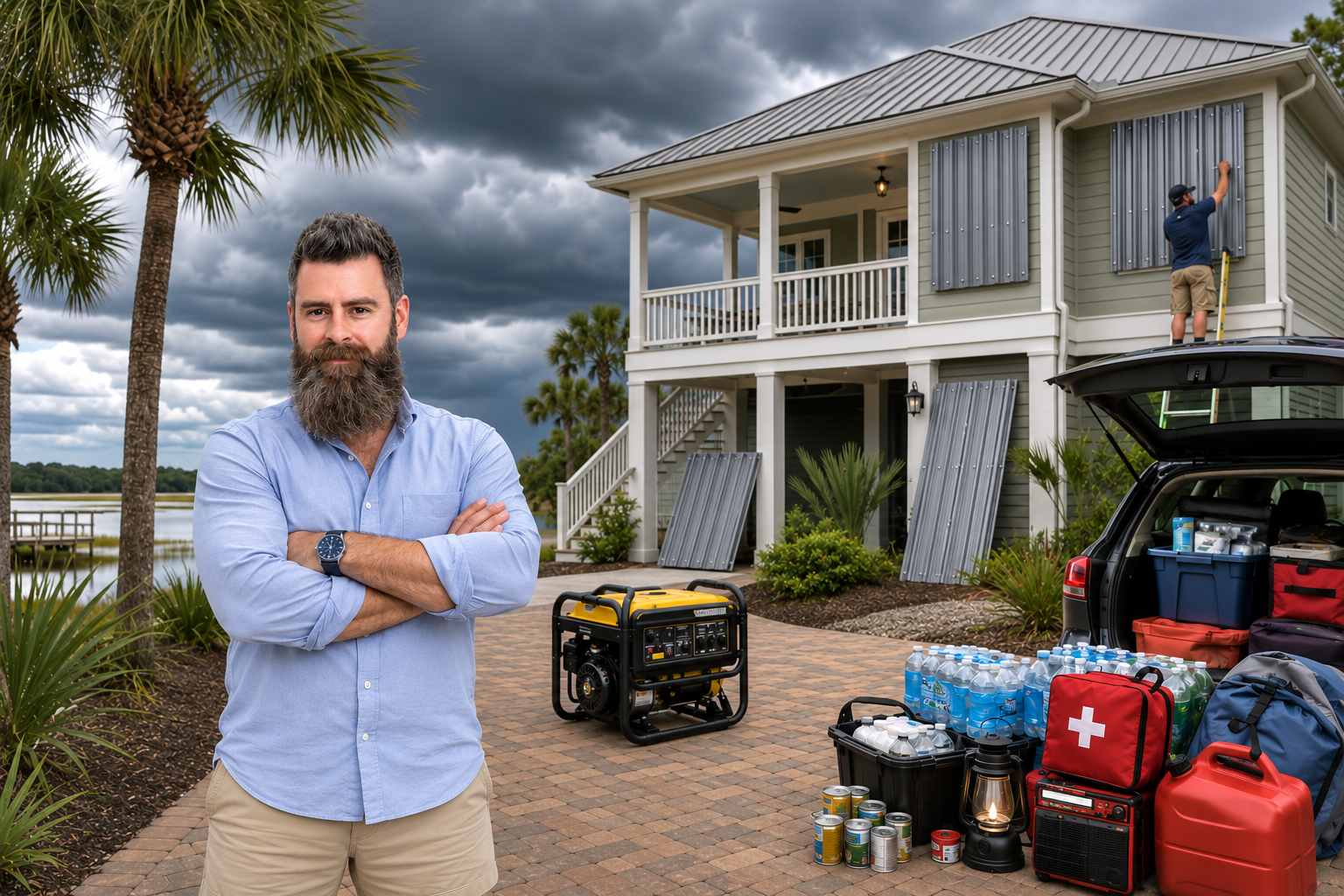
Living in the South Carolina Lowcountry comes with a lot of advantages, but hurricane season is something every homeowner needs to take seriously.
For those of us living in Bluffton, Hilton Head Island, Beaufort, Hardeeville, Ridgeland and the surrounding areas, hurricane preparation isn't just about buying bottled water the day before a storm arrives. Our low elevation, proximity to rivers and tidal waterways, limited evacuation routes and potential for storm surge make planning ahead especially important.
Atlantic hurricane season officially runs June 1 through November 30, although tropical systems can occur outside those dates. South Carolina Emergency Management officials recommend preparing before there is a storm threatening the coast.
Here is what Lowcountry homeowners should know.
First: Know Your Hurricane Evacuation Zone
One of the most important things you can do right now takes less than a minute: find your hurricane evacuation zone.
South Carolina uses predetermined evacuation zones in coastal counties. If an evacuation becomes necessary, state and local officials may order certain zones to leave rather than simply ordering an entire region to evacuate.
The South Carolina Emergency Management Division's Know Your Zone tool allows you to enter your address and determine which evacuation zone applies to your property.
Find Your Hurricane Evacuation Zone – SCEMD Know Your Zone
I recommend checking your zone now and saving it somewhere your entire household knows.
Don't wait until an evacuation is announced to figure it out.
Where Should You Get Hurricane Information?
During hurricane season there can be an overwhelming amount of weather information circulating online. I use several resources, but they serve different purposes.
National Hurricane Center – Your Primary Source
The National Hurricane Center (NHC) should be one of your primary sources for tropical weather information. It provides official storm tracks, watches, warnings, wind probabilities, storm-surge information and forecasts.
One thing people often misunderstand is the famous "cone." The cone shows uncertainty regarding the probable path of the center of the storm. It does not represent the entire area that could experience hurricane conditions. Hurricane and tropical-storm-force winds can extend far beyond it.
National Weather Service Charleston
The National Weather Service's Charleston office is particularly useful because it provides much more localized information for coastal South Carolina, including Beaufort and Jasper Counties.
Beaufort County specifically recommends using both the National Hurricane Center for the larger storm picture and the National Weather Service for more localized forecasts involving wind and flooding.
National Weather Service Charleston
Spaghetti Models / Mike's Weather Page
I also like SpaghettiModels.com, better known as Mike's Weather Page.
It compiles numerous weather models, satellite imagery and tropical forecasting resources in one place. It can be extremely useful for watching trends and seeing how the different computer models are evolving.
Spaghetti Models / Mike's Weather Page
Just remember: an individual computer model is not an official forecast. Models can change dramatically from run to run, particularly several days in advance.
Windy
Windy.com is another excellent tool. It allows you to visually compare wind, rainfall, pressure, waves and forecast models.
I particularly like it for getting a visual understanding of a storm's size and potential wind field.
The Weather Channel and Local Television
The Weather Channel and our local television stations are also useful, especially as a storm gets closer and local impacts become clearer.
My general rule is:
Use weather models to understand possibilities. Use the National Hurricane Center, National Weather Service, SCEMD and local emergency management officials to make decisions.
Sign Up for Local Emergency Alerts
Don't depend entirely on Facebook or television.
Beaufort County
Beaufort County recommends following the Beaufort County Sheriff's Office, Beaufort County Emergency Management and Beaufort County Government for evacuation orders, road information, recovery updates and re-entry information.
The Beaufort County Sheriff's Office also uses Everbridge for emergency notifications.
Jasper County
Jasper County Emergency Management maintains its own emergency preparedness resources and encourages residents to create a family emergency plan including evacuation routes, emergency contacts and a disaster kit.
Jasper County Emergency Services also offers subscriptions for emergency/weather updates.
For Hardeeville residents, the City maintains its own Hurricane Preparedness Center and local alerts.
City of Hardeeville Hurricane Preparedness
What Should You Stock Up On Before a Hurricane?
Don't wait until a hurricane is three days away and fight everyone else in Bluffton for the last case of water.
Build your supplies gradually.
At a minimum, consider keeping the following available:
Water — at least one gallon per person per day for at least three days, although the CDC recommends trying to maintain up to a two-week supply when practical. Remember additional water for pets.
Several days to two weeks of nonperishable food that does not require refrigeration
Manual can opener
Prescription medications
First-aid supplies
Flashlights
Extra batteries
Battery-powered or hand-crank NOAA weather radio
Portable phone chargers/power banks
Cash, preferably including small bills
Important documents in a waterproof container
Copies of insurance policies
Pet food, medications, leashes, carriers and veterinary information
Hygiene supplies
Garbage bags
Cleaning supplies
Work gloves
Basic tools
Fire extinguisher
Bug spray
Sunscreen
Fuel for vehicles
Fuel for generators, stored properly and safely
Coolers and ice or reusable freezer packs
Hardeeville's preparedness guidance actually recommends planning for as much as a two-week supply of food and water, along with portable power, NOAA radio, cash, medications and waterproof document storage.
Also think about the needs specific to your family: infants, older family members, medical devices, dietary restrictions and medications.
Don't Forget Your Vehicles
As a storm approaches:
Fill your gas tank before lines become long.
If you own an electric vehicle, charge it early.
Move vehicles into a garage if possible or away from large trees.
Keep a phone charger, flashlight, water and basic emergency supplies in the vehicle.
The CDC specifically recommends filling your vehicle before the storm and keeping an emergency kit inside.
How Should I Prepare My House?
There is quite a bit you can do before a hurricane arrives.
Start outside.
Bring patio furniture, umbrellas, grills, decorations, toys, garbage cans, hanging plants and anything else that could become airborne inside or into a protected location.
Trim dead limbs and address unhealthy trees before hurricane season.
Clean gutters and drainage areas.
Make sure your roof is in good condition.
Check exterior doors.
Check your garage door.
Seal obvious gaps around windows and doors.
Move valuable items away from low areas that could potentially take on water.
Document the interior and exterior of your house with photos and video before the storm.
Beaufort County specifically recommends inspecting the roof, checking hurricane shutters, cleaning gutters, reviewing insurance coverage and documenting belongings before a storm arrives.
What About Hurricane Shutters?
If your builder installed hurricane shutters or removable hurricane panels, use them when conditions warrant it.
Storm shutters aren't simply there to keep a window from getting wet. Their major purpose is protecting openings from windborne debris.
If a window, door or particularly a large garage door fails during high winds, pressure can enter the house and dramatically increase forces acting on the roof and walls.
FEMA recommends protecting windows and doors with storm shutters or other approved protection, and research from the Insurance Institute for Business & Home Safety emphasizes the importance of protecting large openings such as garage doors.
If you have builder-supplied shutters:
Before hurricane season, make sure you know where every panel is located, which window it fits and that you have all the necessary hardware.
If they aren't labeled, label them.
Do a test installation.
You don't want your first attempt at figuring out hurricane shutters to happen with 40 mph winds already blowing outside.
If you have impact-rated windows, find the manufacturer's information so you know exactly what protection they were designed to provide.
Is a Generator Necessary in the Lowcountry?
Necessary? Not necessarily. Useful? Absolutely.
Whether you should own a generator really depends on your situation.
Power outages following hurricanes can last anywhere from a few hours to days or longer depending on the storm. If losing refrigeration, air conditioning, internet or other electrical systems would create a major problem for your household, a generator can be a worthwhile investment.
It becomes significantly more important if someone in the household depends on medical equipment requiring electricity.
There are basically two approaches.
A portable generator can keep refrigerators, freezers, lights and selected appliances operating.
A whole-house standby generator can automatically power much or all of the house depending on its size and installation.
Portable generators, however, come with serious safety concerns.
The CDC says generators should always operate outside and at least 20 feet away from windows, doors and vents because of the risk of carbon monoxide poisoning.
Never operate a generator in your garage — even with the garage door open.
Never connect a portable generator directly to your home's wiring unless an appropriate transfer switch or other approved equipment has been installed by a qualified electrician. FEMA warns that improper connections can send electricity back onto power lines and potentially electrocute utility workers.
And have working carbon monoxide detectors inside the house.
Will Homeowners Insurance Cover Hurricane Damage?
This is one of the most important subjects for Lowcountry homeowners.
The answer is:
It depends on what caused the damage and what your policy covers.
A homeowners policy may cover damage caused by hurricane winds, falling trees and wind-driven events if those perils are included in your policy.
But here's the big distinction:
Flooding and storm surge are generally NOT covered by standard homeowners insurance.
The South Carolina Department of Insurance specifically states that water entering from street flooding, overflowing waterways or storm surge is generally covered through flood insurance — not a standard homeowners or renters policy.
That distinction can be extremely important after a hurricane.
You should ask your insurance agent:
What is my hurricane or named-storm deductible?
Do I have wind and hail coverage?
Do I have flood insurance?
What is my dwelling replacement amount?
Do I have replacement-cost or actual-cash-value coverage on my contents?
What coverage do I have for temporary housing or additional living expenses?
What happens if both wind and flooding damage the house?
Also photograph or video every room in your house. Open closets, cabinets and the garage. The South Carolina Department of Insurance recommends creating a detailed home inventory before a disaster.
Don't Wait Until a Storm Is Coming
This is particularly important.
The South Carolina Department of Insurance says insurance companies will often place a moratorium on new policies or changes to existing policies once a named storm appears likely to affect the area.
NFIP flood policies commonly have a 30-day waiting period before coverage becomes effective.
Reviewing insurance should therefore be an every-spring project, not something you do while watching a hurricane approaching Florida.
Should I Evacuate?
If state or local officials order your evacuation zone to leave:
Leave.
The house is replaceable. You aren't.
The biggest hurricane danger in coastal South Carolina isn't necessarily wind. SCEMD identifies storm surge as the greatest threat to life and property from hurricanes and tropical storms.
Our rivers, marshes, creeks and low elevation are a big part of what makes the Lowcountry beautiful. They also make portions of our area particularly vulnerable to storm surge and flooding.
Don't make evacuation decisions solely based on the hurricane's category.
A lower-category hurricane can still produce catastrophic flooding and storm surge.
How Do I Evacuate Beaufort or Jasper County?
Before hurricane season, determine your evacuation zone and route.
South Carolina has designated hurricane evacuation routes marked with blue hurricane evacuation signs.
When an evacuation is underway, state officials specifically advise following the official evacuation routes and signs rather than blindly following your GPS. GPS systems can direct drivers toward roads that are flooded, closed or not being used for evacuation traffic.
You can check current travel conditions through 511SC.
South Carolina 511 Traffic & Evacuation Information
Most importantly: leave early.
Emergency traffic operations eventually stop as tropical-storm-force winds approach. SCEMD notes that emergency personnel and transportation crews may have to seek shelter before winds reach dangerous levels, and roads or bridges may become inaccessible.
Where Should I Evacuate To?
There isn't one universal answer such as "everyone should go to Columbia."
The correct destination depends on the individual storm.
Your goal is to get:
Away from storm surge, outside the evacuation area and away from the storm's expected dangerous impacts.
If you have friends or family safely inland, discuss staying with them before hurricane season.
Hotels are another option, but reservations can disappear quickly once evacuation orders begin.
Have more than one destination in mind because hurricane tracks change.
For example, a storm traveling north along the coastline may make driving north less desirable, while a storm approaching from a different direction may make another route preferable.
This is another reason to listen to emergency management officials instead of automatically following the same evacuation plan every hurricane.
Beaufort County specifically advises making advance arrangements with inland family or friends when possible.
What If I Need a Hurricane Shelter?
Do not assume your regular neighborhood hurricane shelter is sitting somewhere nearby waiting to open.
For Beaufort County residents, public hurricane shelters are generally located outside Beaufort County and shelter locations are announced after an evacuation is ordered.
SCEMD maintains an emergency shelter system and publishes activated shelters during emergencies.
If you require medical equipment that depends on electricity, South Carolina also operates Medical Equipment Power Shelters when activated.
Don't assume every shelter accepts pets. Verify before leaving.
What If I Don't Have Transportation?
This is something you should address well before an evacuation order.
Beaufort County EMS notes that evacuation transportation assistance is available through Palmetto Breeze and encourages residents who may need assistance to register early.
If you or someone in your household cannot evacuate independently because of age, disability or medical needs, contact your county emergency management office before hurricane season.
What About Pets?
Your hurricane plan needs to include your pets from the beginning.
Have:
A carrier or crate.
Leashes.
Food and water.
Medications.
Vaccination records.
Identification.
Waste bags/litter.
A familiar blanket or bed.
Current photographs.
Beaufort County recommends preparing a dedicated pet evacuation bag and determining in advance whether your intended shelter or hotel accepts animals.
Never leave pets behind assuming you will be able to return the next morning.
Can I Come Back Home Immediately After the Hurricane?
Not necessarily.
This surprises some people.
An evacuation order ending doesn't automatically mean every neighborhood is immediately safe or accessible.
Roads may be blocked by trees.
Power lines may be down.
Bridges may need inspections.
Floodwaters may still be covering roadways.
Water and sewer systems may be compromised.
Emergency crews need room to operate.
In Beaufort County, re-entry is controlled after a mandatory evacuation. Specialized emergency and business re-entry passes exist for qualified organizations and personnel, but they should not be confused with permission for the general public to return whenever they choose.
Residents should wait for official announcements indicating when their area has reopened.
Follow the Beaufort County Sheriff's Office, Beaufort County Emergency Management, Jasper County Emergency Management, municipal governments and SCEMD for re-entry information.
Returning Home Safely
When officials allow you to return, don't assume the danger is over.
Be especially careful around:
Downed power lines.
Standing water.
Flooded roads.
Damaged trees.
Unstable structures.
Gas leaks.
Electrical systems exposed to water.
Contaminated water.
Spoiled food.
The CDC recommends avoiding re-entry into seriously damaged structures until they have been determined safe and warns that tap water may not initially be safe following a major storm.
If floodwater entered your home, take photographs before removing damaged materials whenever safely possible.
Contact your insurance carrier promptly.
Make reasonable temporary repairs to prevent additional damage and save every receipt. The South Carolina Department of Insurance notes that temporary repair expenses may potentially be reimbursable depending on your coverage.
A Few Lowcountry-Specific Things People Forget
Garage Doors
Your garage door is one of the largest openings in your house. Make sure it is wind-rated or properly reinforced. Failure of a garage door can dramatically increase wind pressure inside a home.
Trees
Our mature oaks and pines are beautiful, but dead limbs and unhealthy trees can become serious hazards. Address questionable trees before hurricane season, not two days before landfall.
Drainage
Keep storm drains, gutters and yard drainage paths clear.
Outdoor Furniture
A lightweight patio chair can become a projectile in hurricane-force winds. Bring everything inside that reasonably can be moved.
Important Documents
Keep copies of insurance policies, identification, birth certificates, vehicle information, medical records and important contact information somewhere waterproof — and ideally backed up digitally.
Refrigerators and Freezers
Turn your refrigerator and freezer colder before the storm. Minimize opening them during a power outage.
Phones
Charge every phone, tablet and power bank before weather deteriorates.
Download important maps and documents ahead of time in case internet and cell service become unreliable.
Cash
ATMs and credit-card systems don't work particularly well without electricity or internet service. Keep some emergency cash available.
My Lowcountry Hurricane Preparation Timeline
At the Beginning of Hurricane Season
Review insurance.
Check flood coverage.
Find your evacuation zone.
Confirm evacuation destinations.
Check hurricane shutters.
Service your generator.
Trim trees.
Photograph your home.
Build your emergency supplies.
Sign up for local emergency alerts.
When a Storm Is About 5–7 Days Away
Don't panic over individual computer models.
Start watching the National Hurricane Center closely.
Refill prescriptions.
Charge portable batteries.
Check food, water and fuel supplies.
Think about travel arrangements.
Around 3 Days Before Potential Impacts
Follow official forecasts closely.
Fill vehicles.
Secure outdoor furniture.
Begin installing shutters if appropriate.
Prepare refrigerated food.
Confirm your evacuation destination.
Get pet supplies together.
Pack important documents.
If an Evacuation Is Ordered
Go.
Follow the official evacuation route.
Leave earlier rather than later.
Take medications, documents, pets, chargers and your emergency kit.
Don't rely exclusively on GPS.
After the Storm
Wait for official re-entry instructions.
Never drive through floodwater.
Watch for power lines.
Document damage.
Contact your insurance carrier.
Avoid unlicensed contractors and post-disaster scams.
The Websites I Recommend Bookmarking
Official Forecasts
National Weather Service Charleston
Storm Tracking & Visualization
Spaghetti Models / Mike's Weather Page
South Carolina Emergency Information
South Carolina Emergency Management Division
Local Government
Beaufort County Sheriff's Office Storm Center
Jasper County Emergency Preparedness
Hardeeville Hurricane Preparedness
Insurance
South Carolina Department of Insurance Hurricane Preparedness
Prepare Early — Then Don't Panic
Living in the Lowcountry means hurricanes will always be part of the conversation.
Preparation doesn't mean panicking every time a weather model shows something near South Carolina.
Quite the opposite.
If you know your evacuation zone, understand your insurance, have supplies at home, know how your shutters work, have a plan for your pets, know where you're going if you evacuate and know which sources to trust, there is significantly less to figure out when a storm actually threatens our area.
Prepare before the storm exists. Monitor when one develops. And when local emergency officials tell you it's time to act — act.
This article is provided for general informational purposes and is not intended to replace instructions from emergency management officials, meteorologists, insurance professionals or other authorities. Hurricane conditions and evacuation procedures can change from storm to storm. Always follow current instructions from local and state emergency management agencies.
Check out this article next